Self-reference 2 (Paradoxes)

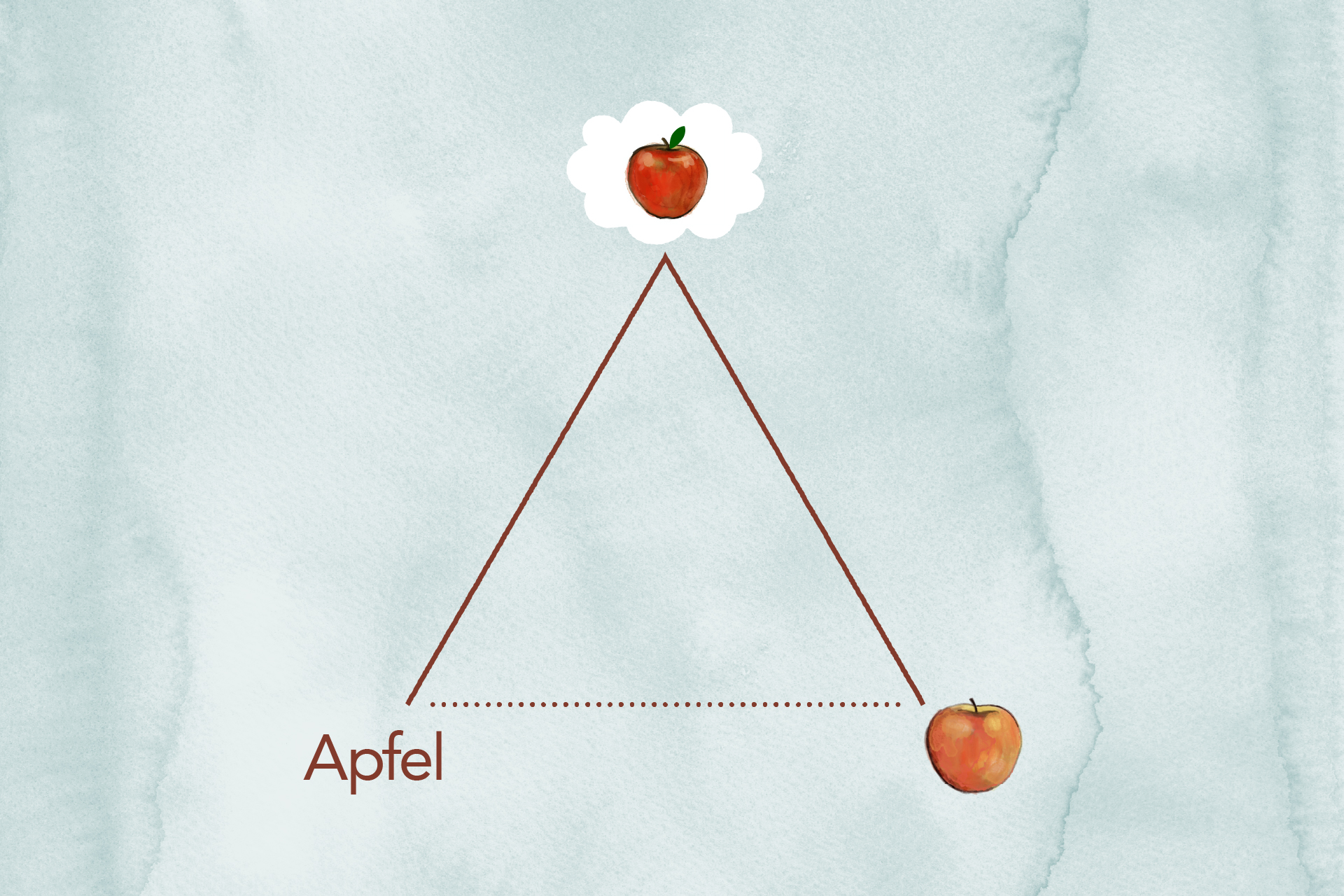
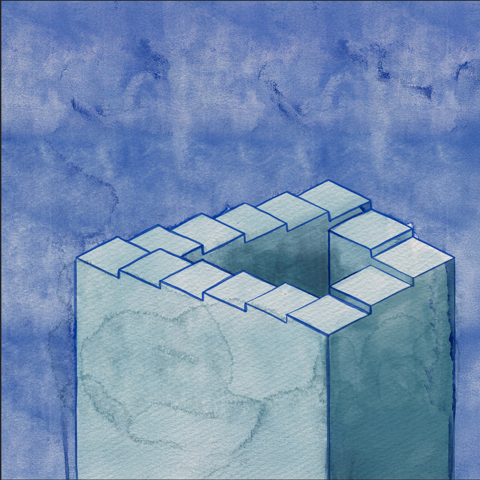
Simple instruction for generating paradoxes The trick with which classical logical systems can be invalidated consists of two instructions: 1: A statement refers to itself. 2: The reference or the statement contains a negation. This constellation always results in a paradox. A famous example of a paradox is the barber who shaves all the men in the village, except of course those who shave themselves (they don't need the barber). The formal paradox arises from the question of whether the barber shaves himself. If he does, he's one of those men who shave themselves and, as the statement about
Self-reference 1

Douglas Hofstadters 'Gödel-Escher-Bach' In the 1980s, I read Douglas Hofstadter's cult book ‘Gödel-Escher-Bach’ with fascination. Central to it is Gödel’s incompleteness theorem. This theorem shows the limit of classical mathematical logic. Gödel proved this limit in 1931 in conjunction with the fact that it is insurmountable for all classical mathematical systems as a matter of principle. This is quite astonishing! Is mathematics imperfect? As inheritors of the Age of Enlightenment and convinced disciples of rationality, we consider nothing to be more stable and certain than mathematics. Hofstadter's book impressed me. However, at certain points, for instance on the subject of the ‘coding’ of

By |2025-12-03T14:42:56+00:0025. February 2025|Categories: Logic, Self-Referentiality|0 Comments

Ijon Tichy meets artificial Intelligence

Stanislaw Lem on entropy (littering) Littering in space had been a concern long before Elon Musk's Starlink programme, and various methods for cleaning up the growing clutter in Earth's orbit are currently under discussion. The task is not easy because - due to the second law, the inevitable increase in entropy - all littering tends to increase exponentially. If one of the thousands of pieces of scrap metal in space is hit by another piece of scrap metal, the one piece that was hit creates many new pieces that fly around at insane speeds. Space pollution is therefore a self-perpetuating

Georg Spencer-Browns Distinction and the Bit

continues paradoxes and logic (part 2) History Before we Georg Spencer-Brown's (GSB's) distinction as basic element for logic, physics, biology and philosophy, it is helpful to compare it with another, much better-known basic form, namely the bit. This allows us to better understand the nature of GSB's distinction and the revolutionary nature of his innovation. Bits and GSB forms can both be regarded as basic building blocks for information processing. Software structures are technically based on bits, but the forms of GSB (‘draw a distinction’) are just as simple, fundamental and astonishingly similar. Nevertheless, there are characteristic differences.  Fig. 1:

By |2025-11-15T12:33:39+00:0023. August 2024|Categories: Information, Logic, Bits|Tags: , , , |0 Comments

Paradoxes and Logic (Part 2)

continues Paradoxes and Logic (part 1) "Draw a Distinction" Spencer-Brown introduces the elementary building block of his formal logic with the words ‘Draw a Distinction’. Figure 1 shows this very simple formal element: ​ Fig 1: The form of Spencer-Brown A Radical Abstraction In fact, his logic consists exclusively of this building block. Spencer-Brown has thus achieved an extreme abstraction that is more abstract than anything mathematicians and logicians have found so far. What is the meaning of this form? Spencer-Brown is aiming at an elementary process, namely the ‘drawing of a distinction’. This elementary process now divides the world into

By |2025-11-25T18:26:54+00:0022. August 2024|Categories: Information, Logic, Paradoxes|Tags: , , , |0 Comments

Paradoxes and Logic (Part 1)

Logic in Practice and Theory Computer programs consist of algorithms. Algorithms are instructions on how and in what order an input is to be processed. Algorithms are nothing more than applied logic and a programmer is a practising logician. But logic is a broad field. In a very narrow sense, logic is a part of mathematics; in a broad sense, logic is everything that has to do with thinking. These two poles show a clear contrast: The logic of mathematics is closed and well-defined, whereas the logic of thought tends to elude precise observation: How do I come to a

The theory of the three worlds

The theory of the three worlds, according to Roger Penrose connects different fields of science and philosophy. The three worlds are: Die platonic world contains objects that are non-local and "timeless". The physical world contains objects which can be examined from outside. The mental world is how we experience things in our head. Music in the three worlds Musical scales are part of all three worlds  

By |2025-11-15T13:19:40+00:0029. September 2020|Categories: Logic, music, Theory of the Three Worlds|0 Comments

The theory of the three worlds (Penrose)

The theory of the three worlds There are practical questions which concern our specific lives, and there are theoretical questions which seemingly don’t. However, there are also theoretical considerations which definitely concern our practical everyday lives. One of these is the three worlds theory, which deals with questions as to which worlds we specifically live in. On what foundation is our everyday existence based? The theory of the three worlds points to the fact that we simultaneously live in three completely different worlds. Practically, this does not constitute a problem for us; theoretically, however, the question arises as to how

By |2025-09-23T12:44:32+00:0028. September 2020|Categories: Logic, Theory of the Three Worlds|1 Comment

Static and dynamic IF-THEN, Part 2

(This blog post continues the introduction to the dynamic IF-THEN.) Several IF-THENs next to each other Let’s have a look at the following situation: IF A, THEN B IF A, THEN C If a conclusion B and, at the same time, a conclusion C can be drawn from a premise A, then which conclusion is drawn first? Static and dynamic logic In terms of classical logic, this does not matter since A, B and C always exist simultaneously in a static system and do not change their truthfulness. Therefore it does not matter whether one or the other conclusion is

By |2025-11-25T18:28:00+00:0018. June 2020|Categories: Information, Logic, Bits|Tags: , , , , , |0 Comments

Information Reduction 8: Different Macro States

Two states at the same time In my last article I showed how a system can be described at two levels: that of the micro and that of the macro state. At the micro level, all the information is present in full detail; at the macro level there is less information but what there is, is more stable. We have already discussed the example of the glass of water, where  the micro state describes the movement of the individual water molecules, whereas the macro state encompasses the temperature of the liquid. In this paper I would like to discuss how

Go to Top