The mental world

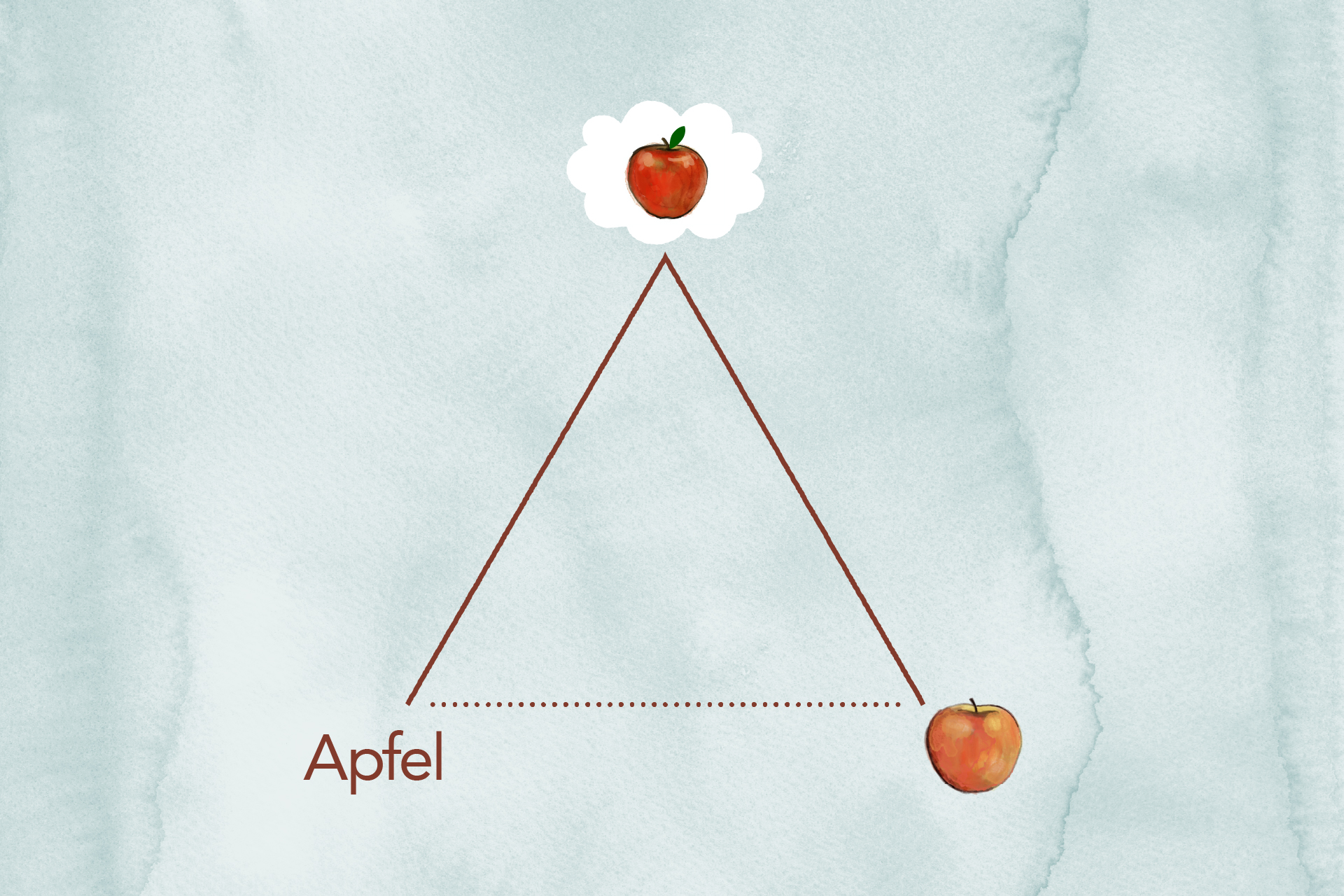
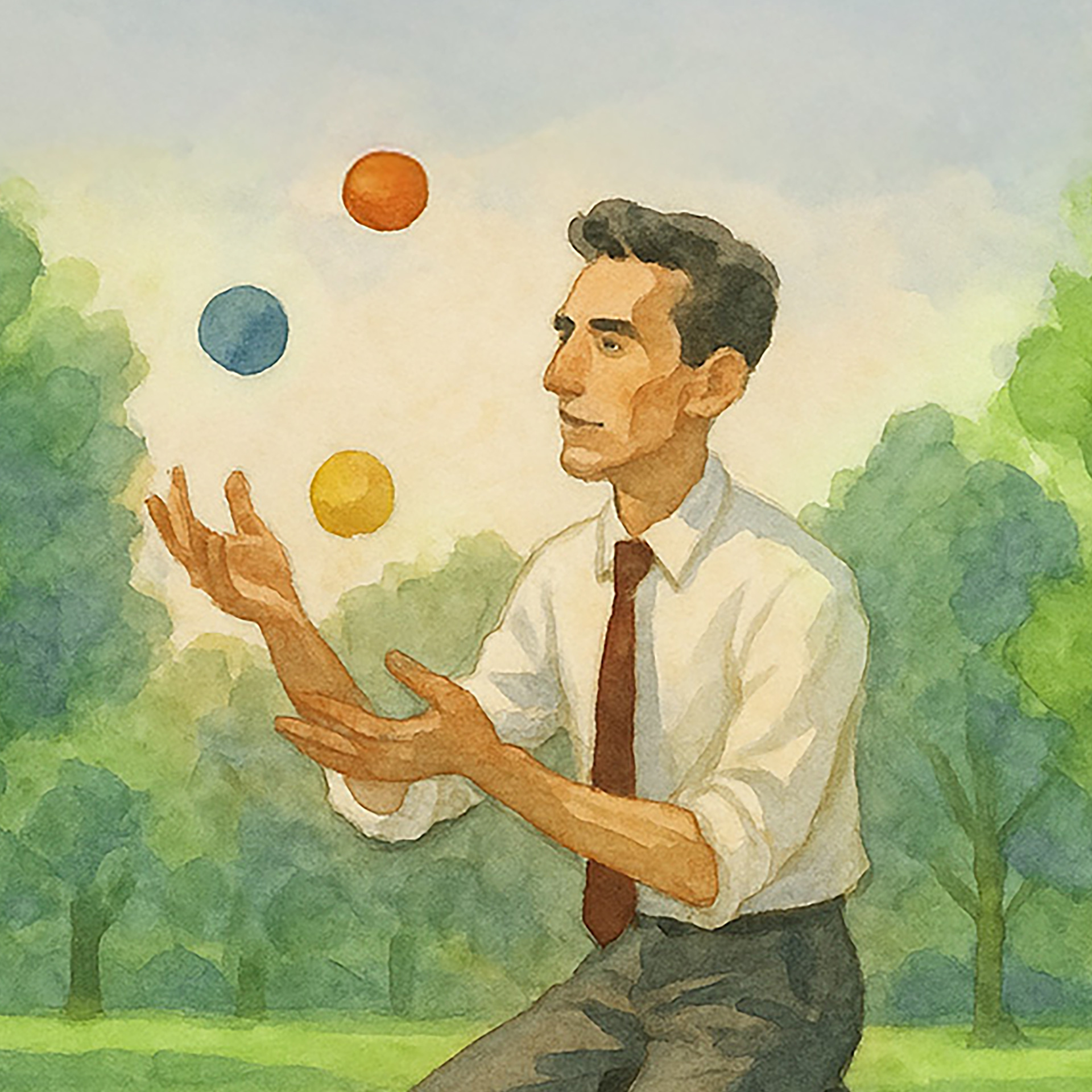
What is the mental world? The mental world is the world in our heads. It is the way in which we perceive the world; it consists of our sensations, feelings and thoughts. It is a completely subjective world. In the theory of the three worlds, the mental world is the third world besides the physical and the Platonic worlds. Difference from the physical world Whereas the physical world is objectively comprehensible, the mental world remains subjective. In other words: whereas we can observe the objects of the physical world from the outside, this is impossible with the objects of the
What are the advantages of the equal temperament?

The equal temperament has prevailed in our occidental music culture – despite the obvious shortcoming that its intervals are not pure any longer. This was only possible because some substantial advantages offset the flaw of impurity: 1.  One single tuning serves all keys: the fundamental tone is freely selectable. In pure intonation, instruments basically have to be retuned for each key and each fundamental tone. With a harpsichord, this concerns a few strings, but with an organ, this is really a great undertaking in view of the vast number of registers and pipes. The further the keys are apart from

How the tempered scales came into being

Musical scales before tempering Natural musical scales The musical scales of human cultures developed naturally, i.e. without any conscious mathematical considerations whatsoever, in the course of millennia. The fact that there is a great deal of mathematics behind them nonetheless has something to do with the resonances between the scale tones and the fundamental tone. These resonances strike us as attractive, and music that is based on such resonances is capable of uniting human communities. Mathematically, resonances can be traced back to fractions with as low numbers as possible, and we were able to deduce mathematically which nine intervals have

By |2025-11-15T13:07:43+00:001. February 2022|Categories: music, Theory of the Three Worlds, Music scales|Tags: , |0 Comments

Two Less Resonant Intervals for the Gaps

Starting point: two gaps In the previous post, we saw that in the sequence of the ten scales tones found so far, there are two gaps. Can we find resonant tones there, too? We already know the following: We already know the ten most resonant intervals in the octave. These ten intervals serve to constitute the five standard pentatonic scales and our major and minor scales. There, the gaps are not obtrusive; they are only conspicuous in the distribution of all the ten potential scale tones. Intervals do not occur on their own, either in a chord or in a melody. Thus

By |2025-11-15T13:08:05+00:0027. December 2021|Categories: music, Theory of the Three Worlds, Music scales|Tags: , |Comments Off on Two Less Resonant Intervals for the Gaps

The Distribution of Tones within the Octave

The ten most resonant tones within the octave In this series of texts, we examine musical scales from the perspective of the three worlds. All three worlds are involved, as we saw, for example, when we answered the question as to why the musical scales of all musical cultures always cover precisely one octave. This cannot be explained in purely mathematical or physical terms. It is only through the involvement of the third world, namely our mental world, that the significance of the octave becomes evident. The selection of the tones used in a musical scale is determined by all three worlds through

By |2025-11-15T13:08:43+00:0016. December 2021|Categories: music, Theory of the Three Worlds, Music scales|Tags: , |Comments Off on The Distribution of Tones within the Octave

How does the pythagorean comma come about?

The Pythagorean comma The Pythagorean comma demonstrates that our tonal system is not perfectly consistent but has a gap whose form and cause I will describe in this post. The comma is relevant in terms of both ourpythagorean comma musical practice, since it has very specific effects, and of philosophy and science, since it is typical of the problems that we observe in the interplay of our  three worlds (according to Penrose). Thus it is a topic that is not solely relevant to musicians but also to people who are interested in the question as to how mathematics (ideal world),

By |2025-12-03T14:57:28+00:005. November 2021|Categories: music, Theory of the Three Worlds, Music scales|Tags: , , |Comments Off on How does the pythagorean comma come about?

The major scale introduces tension to the resonances

The major scale The major scale (Ionian mode) is the most widespread musical scale both in Europe and globally. It is a heptatonic scale, i.e. a musical scale with seven tones. It is characterised by very special resonance ratios, which serve well to explain its worldwide appreciation. Below, I have listed the tones of the major scale of C, ascending from the bottom to the top, together with the intervals between each tone and the fundamental tone. Of course, it is these intervals that constitute the musical scale. We could also start the musical scale with any other tone and

Standard pentatonic scales

As we have seen in the previous post, the tones C – D – E – G – A – C constitute the standard major pentatonic scale. All in all, another four pentatonic scales can be created with the simple criteria for resonant pentatonic scales. These five pentatonic scales are the five musical scales which according to our mathematical criteria allow for resonances among all their tones. We will see later on that we are able to create all the musical scales traditionally used in Europe with our pool of the nine most resonant tones. In the heptatonic scales, however, for instance

Expressions around waves and sine waves

Sine waves play a crucial part for our considerations of resonance. On this page, I would like to explain the terms that I use in this respect. Wave A wave is a motion in time which oscillates around a baseline. A wave can have different shapes. For our considerations of resonance, we use pure sine waves; such a wave is shown in the graph above. Amplitude The amplitude is the deviation of a wave from the baseline. It does not play any primary role in our considerations. Period A period lasts as long as the wave takes to arrive in the same

Calculating with frequencies and intervals

On this page, I will explain some rules which are applicable when we calculate with intervals and their frequencies. Intervals are fractions An interval ranges from a lower tone to a higher one. The fraction of the interval is calculated by dividing the frequency of the higher tone by the frequency of the lower tone, for instance E  =  330 Hz A  =  440 Hz 440/330 = 4/3. This is a fourth. The interval of the fourth is always 4/3: in the fourth, the higher tone is precisely 4/3 times as fast as the lower tone. What counts here are

Go to Top