Criteria for attractive musical scales (overview)

What is this about? According to the theory of the three worlds, mathematics (ideal world) plays a part in physical processes (physical world). Without our subjective perception (mental world), however, we would not be able to notice any of this. I examine the way in which these very different worlds converge in reality with the example of musical scales. There are some riddles here, for instance why human cultures have created thousands of different musical scales, but every one of them uses the octave. This constancy of the octave can easily be explained by resonance, which in the case of the octave is
By |2025-11-12T10:44:52+00:0021. April 2021|Categories: Theory of the Three Worlds|Tags: , |0 Comments

Fractions and Resonances

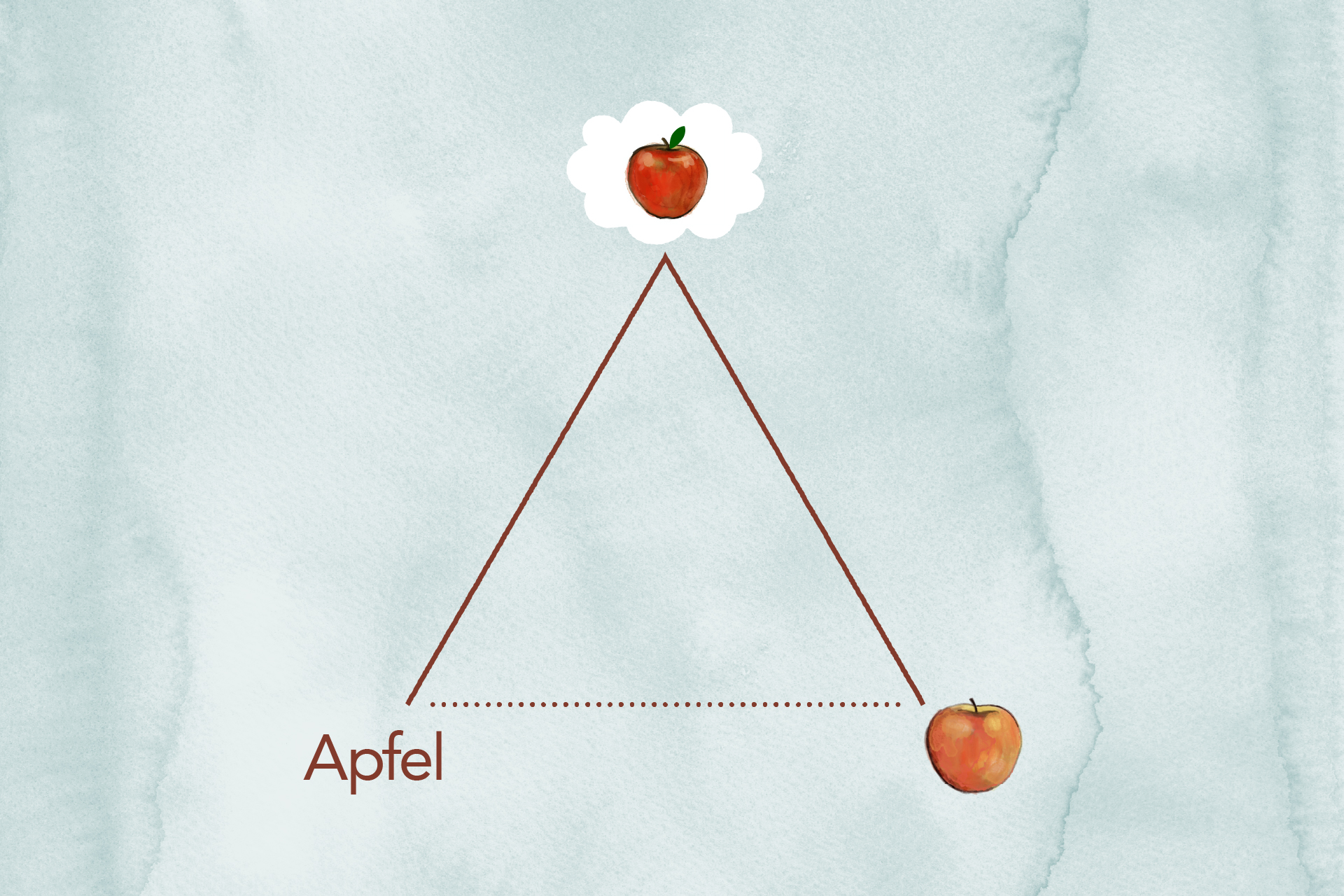
Resonance works through shared overtones Resonance occurs when two vibratory physical objects vibrate together. What matters is the two objects’ natural frequency: 1st degree resonance: both objects vibrate in the same frequency (f2 = f1). 2nd degree resonance: one object vibrates in an overtonefrequency of the other (f2 = n * f1). 3rd degree resonance: both objects vibrate in a shared overtone frequency (f2 = n/m * f1). The 3rd degree resonance reveals itself by the fact that the ratio of the two frequencies corresponds to a fraction of integers (n/m). This 3rd degree resonance is what interests us, for it has an effect

By |2025-11-12T10:43:18+00:009. April 2021|Categories: Theory of the Three Worlds|Tags: , , |0 Comments

“Breaking down” the Fifth

The fifth Let us first have a look at the fifth. It is a feature of  practically all the musical scales of human cultures. Musical scales without this pure fifth do exist, but these musical scales strike me either as artificial and deliberately designed like the whole tone scales or rather uncommon like the Locrian mode. The blues scale makes use of the “blues note” – the “flat five”, a note close to the fifth known as the diminished fifth – but also uses the perfectly normal fifth. After the octave, the fifth is certainly the interval that occurs most

The overtone series is not a muscal scale

The series of overtones As we know, the octave is the first overtone. The physical phenomenon of resonance has helped us understand the role played by the overtones: in the physical world, vibrating media such as strings or pipes can vibrate with their basic frequency, but also with an integral multiple of this frequency. In this way the octave results as the first integral multiple of the basic frequency – i.e. by the fact that its frequency is doubled. It would now be obvious to add the further overtones, which are also integral multiples of the basic frequency, and to

By |2025-12-03T15:00:43+00:001. March 2021|Categories: music, Music scales|Tags: , |Comments Off on The overtone series is not a muscal scale

Real Constraints for Musical Scales

This is a post about the theory of the three worlds and continues the post about the perception of the octave. Does the coincidence of the three worlds only work for the octave? The octave demonstrates how mathematics (Platonic world) enters the physical world, and how this convergence of mathematics (integral numbers) and physics (vibrating matters) gives rise to a very special phenomenon, namely resonance. This resonance, in turn, is perceived by us human subjectively (Penrose: mental world) in quite a special way: We subjectively recognise two tones at an octave’s distance from each other as identical tones. Each of us – regardless

By |2025-11-15T13:15:00+00:009. February 2021|Categories: music|Tags: , |0 Comments

The Perception of the Octave in the Mental World

This is a post about the theory of the three worlds and continues the post about the resonance of the octave. The subjective side The mathematical world (Pythagoras) with its simple ratios and the physical world with its resonance phenomena provide us with an understanding of the octave but still fail to explain why this interval is the basis of all musical scales in all cultures. To understand this, we will also have to look at the mental world, i.e. the world of our subjective perception. This world is accessible to everyone, but it will always remain your own and subjective perception. I can’t read

Go to Top