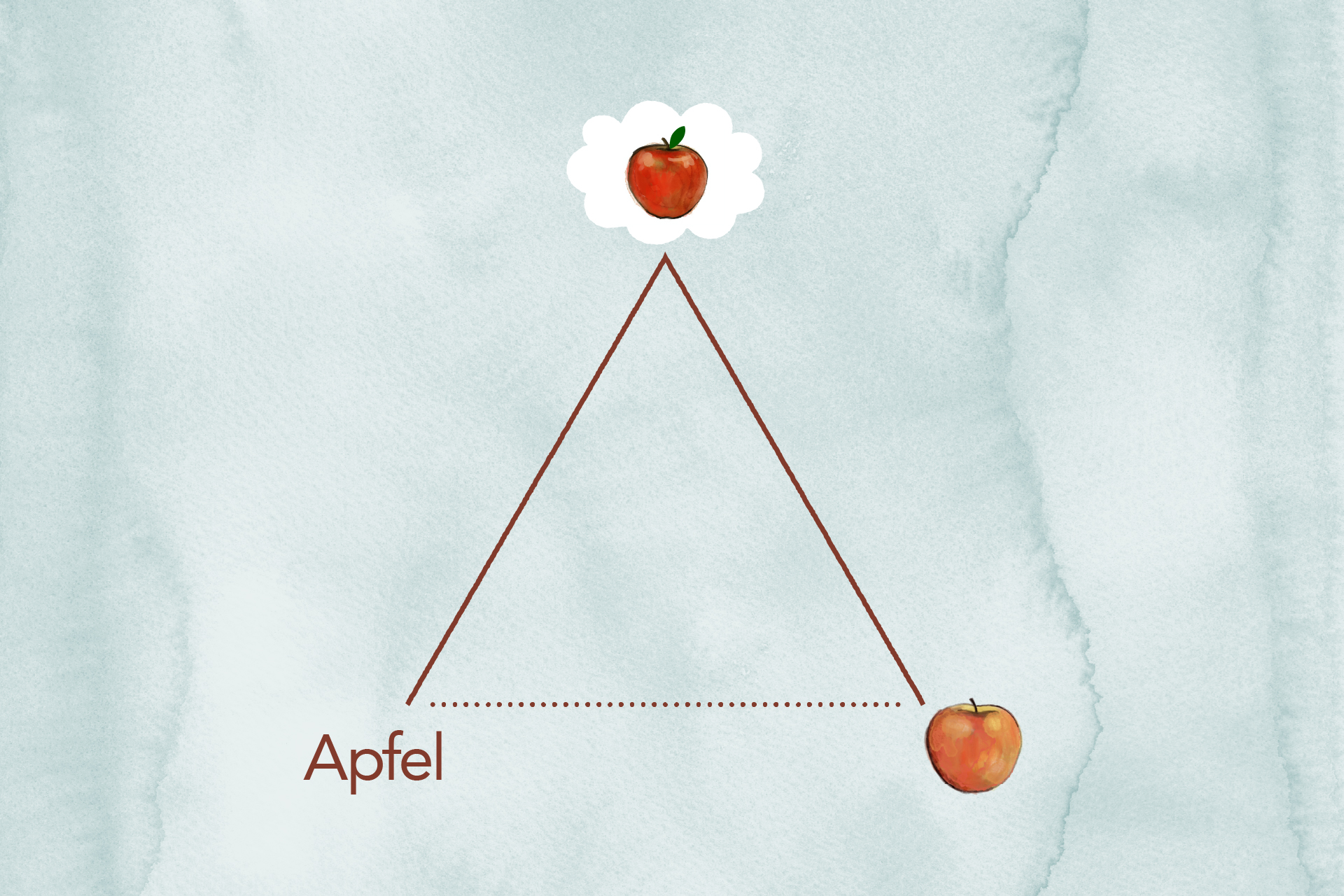
“Breaking down” the Fifth

The fifth Let us first have a look at the fifth. It is a feature of  practically all the musical scales of human cultures. Musical scales without this pure fifth do exist, but these musical scales strike me either as artificial and deliberately designed like the whole tone scales or rather uncommon like the Locrian mode. The blues scale makes use of the “blues note” – the “flat five”, a note close to the fifth known as the diminished fifth – but also uses the perfectly normal fifth. After the octave, the fifth is certainly the interval that occurs most
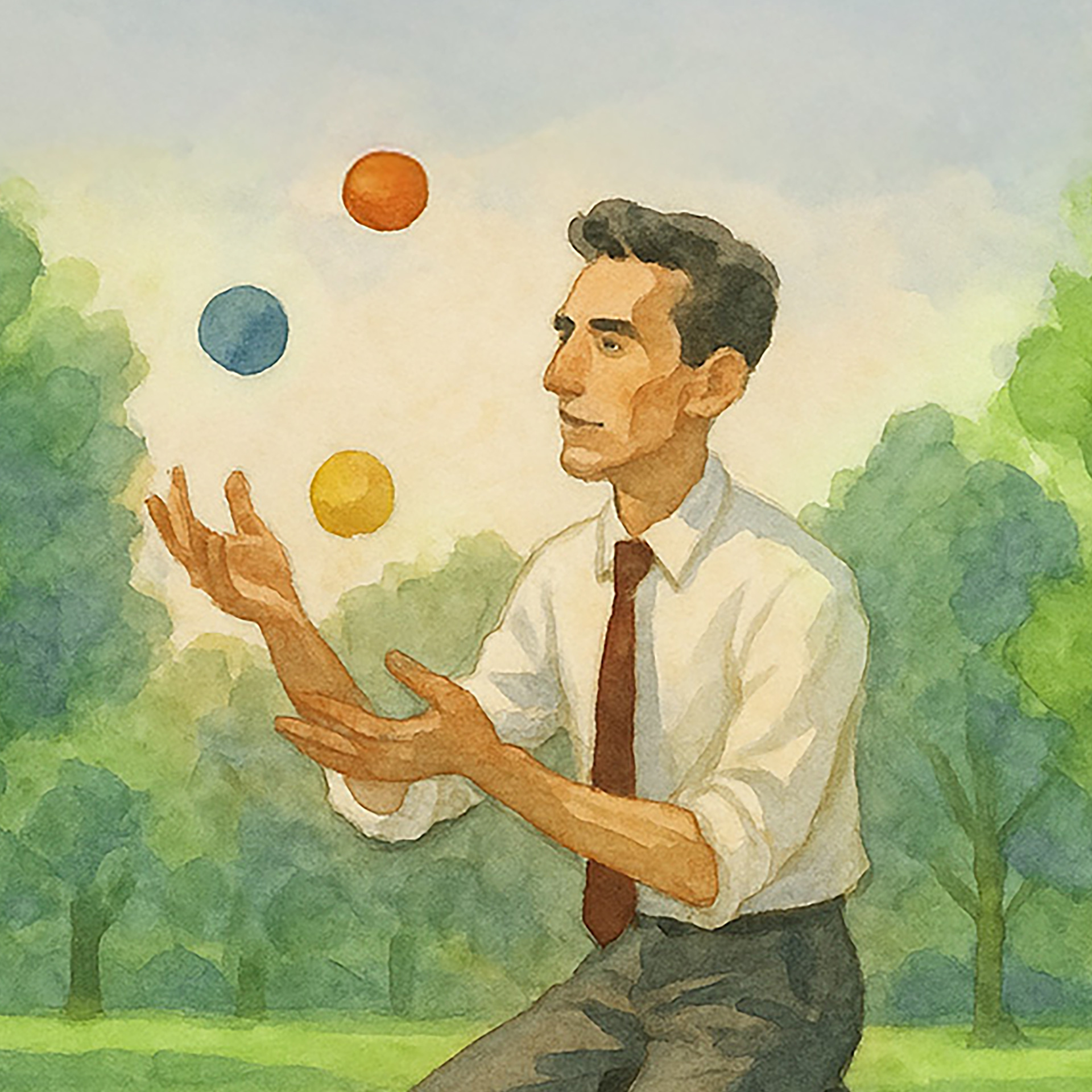

The Perception of the Octave in the Mental World

This is a post about the theory of the three worlds and continues the post about the resonance of the octave. The subjective side The mathematical world (Pythagoras) with its simple ratios and the physical world with its resonance phenomena provide us with an understanding of the octave but still fail to explain why this interval is the basis of all musical scales in all cultures. To understand this, we will also have to look at the mental world, i.e. the world of our subjective perception. This world is accessible to everyone, but it will always remain your own and subjective perception. I can’t read

Resonance and Octave

This is a post about the theory of the three worlds and continues the post about the octave. We generate a resonance If you regard resonance as an abstract phenomenon – or as a musical phenomenon that you have not yet experienced – I recommend that you should conduct the following simple experiment: look for a piano (not a digital one) and for a tone on that piano that you can sing well. Press the key of this note and sing it. Of course, this already requires the resonance in your inner ear, otherwise you would not hit the tone. Then press the

The Octave

A remarkable common feature All the musical scales known to me encompass an octave. Even scales which tones unusual to us Europeans – Arabic, Indian, Japanese and African ones – encompass precisely an octave, i.e. the deepest and highest tones have a distance of precisely an octave, whatever scale this may be. I find this extremely remarkable. This is as if all the world’s languages, which after all have very different words, used the same word for a certain concept, had always done so, and done so independently of each other. What is the reason for this? The theory of

By |2025-11-15T13:16:49+00:0010. December 2020|Categories: Information, music, Theory of the Three Worlds, Music scales|0 Comments

The bit has no meaning

The bit is the basis of IT Our information technology is based on the bit. Everything that happens in our computers is based on this smallest basic element of information. If someone asks you what a single bit means, you may well answer that the bit can assume two states, of which one means 0 and the other means 1. As is generally known, this enables us to write numbers of any size; all we have to do is to line up a sufficient number of bits. But is this really true? Does the one state in the bit

By |2025-12-30T14:59:24+00:0029. November 2020|Categories: if-then, Information, Semantics|0 Comments

Musical Scales in the Theory of the Three Worlds

Scales are mathematical patterns When you hear a melody, it is based on a musical scale. The scale consist of the small number of tones which are allowed and may occur in the melody. In a linear sequence, these tones constitute the musical scale. Most melodies that can be heard in our cultural area can be traced back to one single scale, the Ionian or major scale, which is made up of seven notes in very specific scale steps. Thousands of scales However, there are thousands of different scales. Presumably you are familiar with the minor as well as with

By |2025-11-15T13:17:43+00:0020. November 2020|Categories: Information, music, Theory of the Three Worlds, Music scales|0 Comments

The Platonic world

Why “Platonic”? Penrose calls one of the three worlds in the theory of three worlds as Platonic. Why? Plato The rich Athenian citizen Plato was a follower of the philosopher Socrates. He set up a school of philosophy in the 4th century B.C., which was fundamental for European philosophy and has crucially shaped philosophical discussions until the present day. If Roger Penrose thus calls one of the three worlds “Platonic”, he refers to Plato and specifically to one particular question and the discourse about it, which is still of great significance today. This question is, “Are ideas real?” Plato’s realism of ideas Subsequent

Artificial and natural intelligence: the difference

What is real intelligence?  Paradoxically, the success of artificial intelligence helps us to identify essential conditions of real intelligence. If we accept that artificial intelligence has its limits and, in comparison with real intelligence, reveals clearly discernible flaws – which is precisely what we recognised and described in previous blog posts – then these descriptions do not only show what artificial intelligence lacks, but also where real intelligence is ahead of artificial intelligence. Thus we learn something crucial about natural intelligence. What have we recognised? What are the essential differences? In my view, there are two properties which distinguish real

Now where in artificial intelligence is the intelligence located?

In a nutshell: the intelligence is always located outside. a) Rule-based systems The rules and algorithms of these systems are created by human beings, and no one will ascribe real intelligence to a pocket calculator. The same also applies to all other rule-based systems, however refined they may be. The rules are devised by human beings. b) Conventional corpus-based systems (neural networks) These systems always use an assessed corpus, i.e. a collection of data which have already been evaluated  (details). This assessment decides according to what criteria each individual corpus entry is classified, and this classification then constitutes the real

Static and dynamic IF-THEN, Part 2

The dynamic IF-THEN differs from the static one by the fact that includes a time-span between IF and the THEN. The THEN is in the dynamic IF-THEN always after the IF, while both are simultaneous in the static IF-THEN of the Boolean algebra. This article continues the introduction to the dynamic IF-THEN and shows some of the problems of the conventional static IF-THEN. Several IF-THENs in a logical competition Let’s have a look at the following situation: IF A, THEN B IF A, THEN C If a conclusion B and, at the same time, a conclusion C can be drawn

By |2026-01-06T10:24:45+00:0018. June 2020|Categories: Information, Logic, Bits|Tags: , , , , , |0 Comments
Go to Top