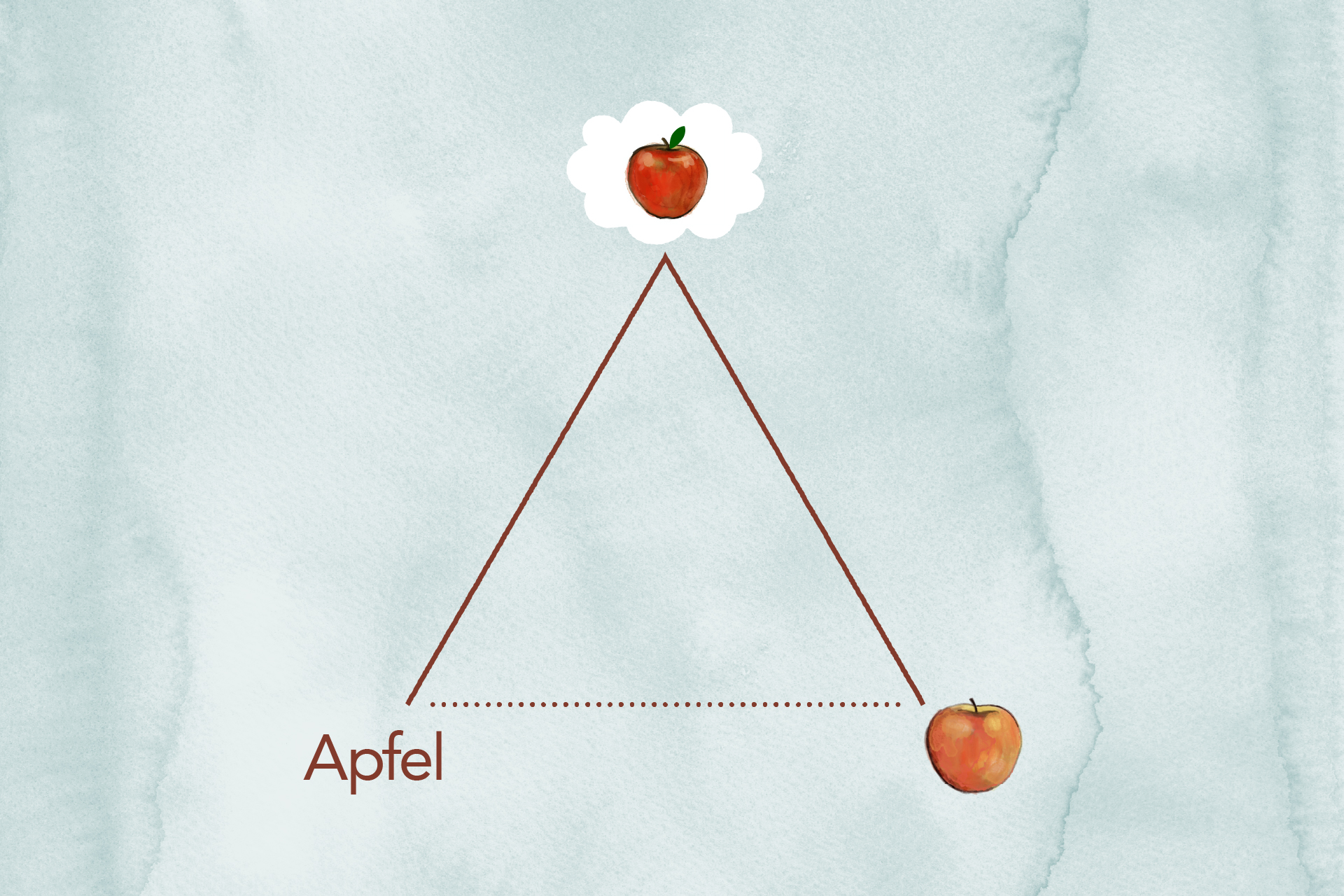
The challenges for rule-based AI

Rule-based in comparison with corpus-based Corpus-based AI (the “Tanks” type; cf. introductory AI post) successfully overcame its weaknesses (cf. preceding post). This was the result of a combination of “brute force” (improved hardware) and an ideal window of opportunity, i.e. when during the super-hot phase of internet expansion, companies such as Google, Amazon, Facebook and many others were able to collect large volumes of data and feed their data corpora with them – and a sufficiently big data corpus is the linchpin of corpus-based AI. Brute force was not enough for rule-based AI, however, nor was there any point in


By |2025-11-12T11:03:23+00:0019. March 2020|Categories: Artificial Intelligence|1 Comment

Corpus-based AI overcomes its weaknesses

Two AI variants: rule-based and corpus-based In the preceding post, I mentioned the two fundamental approaches to attempting to imbue computers with intelligence, namely the rule-based approach and the corpus-based approach. In a rule-based system, the intelligence is situated in a rule pool that is deliberately designed by people. In the corpus-based method, the knowledge is contained in the corpus, i.e. in a data collection which is analysed by a sophisticated program. The performance of both methods has been massively boosted since the 1990s. The most impressive boost has been achieved with the corpus-based method, which is now regarded as

By |2025-11-12T11:06:58+00:0019. March 2020|Categories: Artificial Intelligence|0 Comments

AI: Vodka and tanks

AI in the last century AI is a big buzzword today but was already of interest to me in my field of natural language processing in the 1980s and 1990s. At that time, there were two methods which were occasionally labelled AI, but they could not have been more different from each other. The exciting thing is that these two different methods still exist today and continue to be essentially different from each other. AI-1: vodka The first method, i.e. the one already used by the very first computer pioneers, was purely algorithmic, i.e. rule-based. Aristotle’s syllogisms are a paradigm of this type

Combinatorial explosion

Combinatorial explosion and information processing When we handle information we face combinatorial explosion everywhere. There is always more to know than we can store, and if we want to consider all aspects and details, we run out of memory space as well as of processing power. Most people are not aware of the huge power that lies in this unevitable multiplication of information in combinations, as soon as things get a little bit complex. The good news however is, that the mechanism of the combinatorial explosion is not only a challenge, but a remedy, too, when used in a

Information Reduction 7: Micro and Macro State

Examples of information reduction In previous texts we looked at examples of information reduction in the following areas: Coding / classification Sensory perception DRG (Flat rate per case) Opinion formation Thermodynamics What do they have in common? Micro and macro state What all these examples have in common is that, in terms of information, there are two states: a micro state with a great many details and a macro state with much less information. One very clear example that many of us will remember from our school days is the relationship between the two levels in thermodynamics. The two states

Information Reduction 6: The Waterglass, Revisited

Is that physics? In my article Information reduction 5: The classic glass of water, I drew upon the example of a glass of water to illustrate the principle of information reduction. In this example, the complex and detailed information about the kinetic energy of water molecules (micro level) is reduced to simple information about the temperature of the water. Of course, a physicist might criticise this example – and quite rightly so, because the glass of water is actually much more complicated than this. Boltzmann’s calculations only apply to the ideal gas, i.e. one whose molecules do not interact except

By |2025-11-15T13:22:51+00:0012. January 2020|Categories: Information, Information Reduction|Tags: |0 Comments

Information Reduction 5: The Classic Glass of Water

Information reduction in thermodynamics A very specific example of information reduction can be found in the field of thermodynamics. What makes this example so special is its simplicity. It clearly illustrates the basic structure of information reduction without the complexity found in other examples, such as those from biology. And it’s a subject many of us will already be familiar with from our physics lessons at school. What is temperature? A glass of water contains a huge amount of water molecules, all moving at different speeds and in different directions. These continuously collide with other water molecules, and their speed

Information Reduction 4: Framing

Framing matters The framing effect is a topic that comes up a lot these days. Framing is the phenomenon whereby the same message is perceived differently, depending on what additional information is sent with it. The additional information is provided to give the message the right ‘frame’ so that recipients respond appropriately. Even if the additional information is undoubtedly true, the recipient can be genuinely manipulated by framing, simply by the selection of details that are in themselves factually correct. Framing is, of course, used in advertising, but its role in political reporting has become something of a hot topic

Information Reduction 3: Information is Selection

Information reduction is everywhere In a previous post, I described how the coding of medical facts – a process that leads from a real-world situation to a flat rate per case (DRG) – involves a dramatic reduction in the amount of information: Information reduction This information reduction is a very general phenomenon and by no means limited to information and its coding in the field of medicine. Whenever we notice something, our sensory organs – for example our retinas – reduce the amount of information we take in. Our brain then simplifies the data further so that only the essence

Go to Top