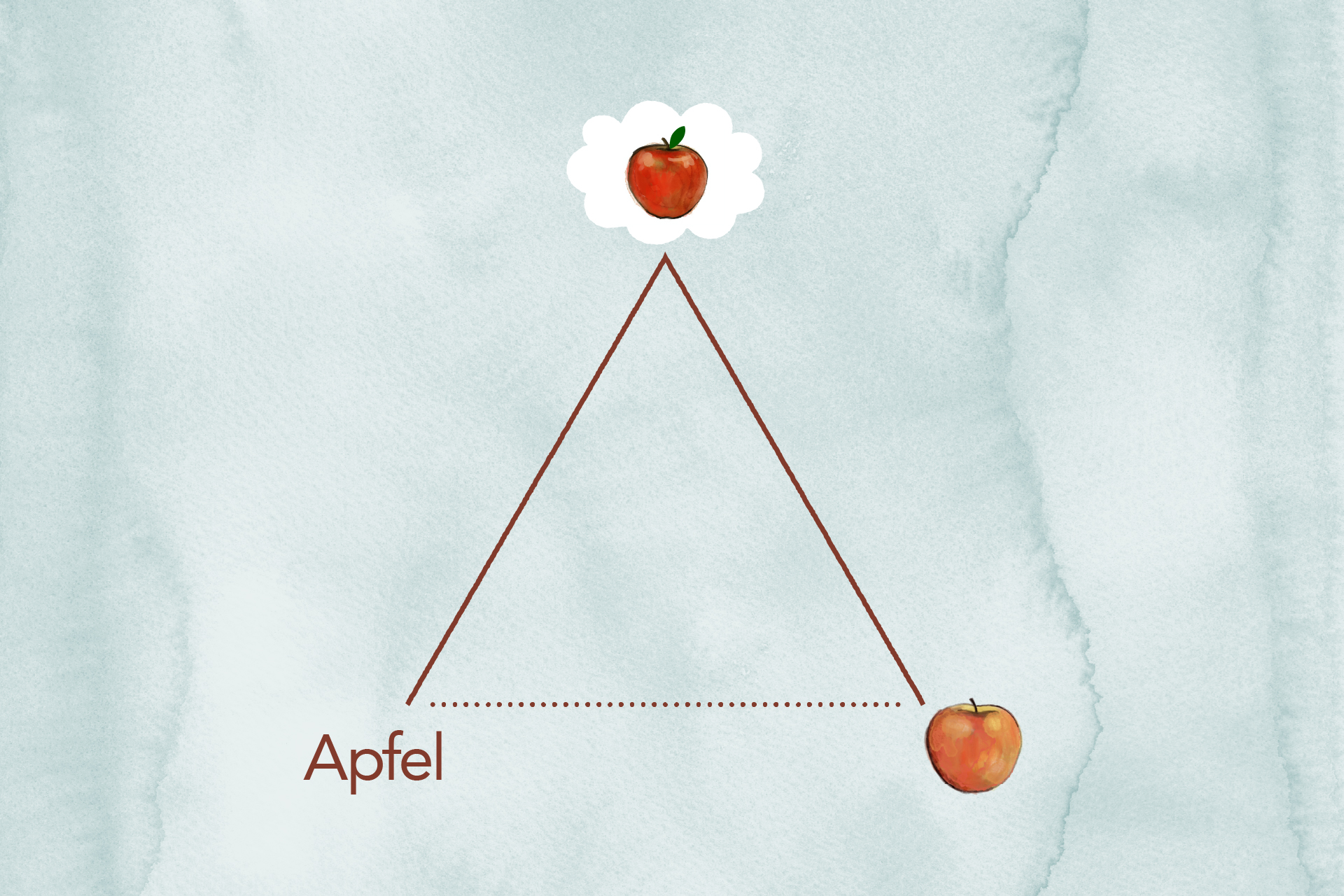
Where is intelligence situated in corpus-based AI?

In a preceding post we saw that in rule-based AI, intelligence is situated in the rules. These rules are drawn up by people, and the system is as intelligent as the people who have formulated them. Where, then, is intelligence situated in corpus-based AI? The answer is somewhat more complicated than in the case of rule-based systems. Let us therefore have a closer look at the structure of such a corpus-based system. It is established in three steps: compiling as large a data collection as possible (corpus), assessing this data collection, training the neural network. The network can be applied as


The three innovations of rule-based AI

Have the neural networks outpaced the rule-based systems? It cannot be ignored: corpus-based AI has overtaken rule-based AI by far. Neural networks are making the running wherever we look. Is the competition dozing? Or are rule-based systems simply incapable of yielding equivalent results to those of neural networks? My answer is that both methods are predisposed for performing very different functions as a matter of principle. A look at their respective modes of action makes clear what the two methods can usefully be employed for. Depending on the problem to be tackled, one or the other has an advantage. Yet

Specification of the challenges for rule-based AI

Rule-based AI is lagging behind The distinction between rule-based AI and corpus-based AI makes sense in several respects since the two systems work in completely different ways. This does not only mean that their challenges are completely different, it also means that as a consequence, their development trajectories are not parallel in terms of time. In my view, the only reason for this is that rule-based AI has reached a dead end from which it will only be able to extricate itself once it has correctly identified its challenges. This is why these challenges will be described in more detail below.

By |2025-11-12T11:06:22+00:0030. March 2020|Categories: Artificial Intelligence|Tags: , |0 Comments

The challenges for rule-based AI

Rule-based in comparison with corpus-based Corpus-based AI (the “Tanks” type; cf. introductory AI post) successfully overcame its weaknesses (cf. preceding post). This was the result of a combination of “brute force” (improved hardware) and an ideal window of opportunity, i.e. when during the super-hot phase of internet expansion, companies such as Google, Amazon, Facebook and many others were able to collect large volumes of data and feed their data corpora with them – and a sufficiently big data corpus is the linchpin of corpus-based AI. Brute force was not enough for rule-based AI, however, nor was there any point in

By |2025-11-12T11:03:23+00:0019. March 2020|Categories: Artificial Intelligence|1 Comment

Corpus-based AI overcomes its weaknesses

Two AI variants: rule-based and corpus-based In the preceding post, I mentioned the two fundamental approaches to attempting to imbue computers with intelligence, namely the rule-based approach and the corpus-based approach. In a rule-based system, the intelligence is situated in a rule pool that is deliberately designed by people. In the corpus-based method, the knowledge is contained in the corpus, i.e. in a data collection which is analysed by a sophisticated program. The performance of both methods has been massively boosted since the 1990s. The most impressive boost has been achieved with the corpus-based method, which is now regarded as

By |2025-11-12T11:06:58+00:0019. March 2020|Categories: Artificial Intelligence|0 Comments

AI: Vodka and tanks

AI in the last century AI is a big buzzword today but was already of interest to me in my field of natural language processing in the 1980s and 1990s. At that time, there were two methods which were occasionally labelled AI, but they could not have been more different from each other. The exciting thing is that these two different methods still exist today and continue to be essentially different from each other. AI-1: vodka The first method, i.e. the one already used by the very first computer pioneers, was purely algorithmic, i.e. rule-based. Aristotle’s syllogisms are a paradigm of this type

Combinatorial explosion

Objects and relations Let us first take a set of objects and consider how many connections (relations) there are between them, leaving aside the nature of the relationships and focussing solely upon their number. This is quite a simple task, because there is always exactly one relation between any two objects. Even if the two objects are entirely unrelated, this fact has a meaning and is thus useful information. We can count the number of possible connections between the objects and compare the number of objects with the number of possible relations. Fig 1: Seven objects and their relations Figure

Go to Top