The Physical World
The world of the natural sciences
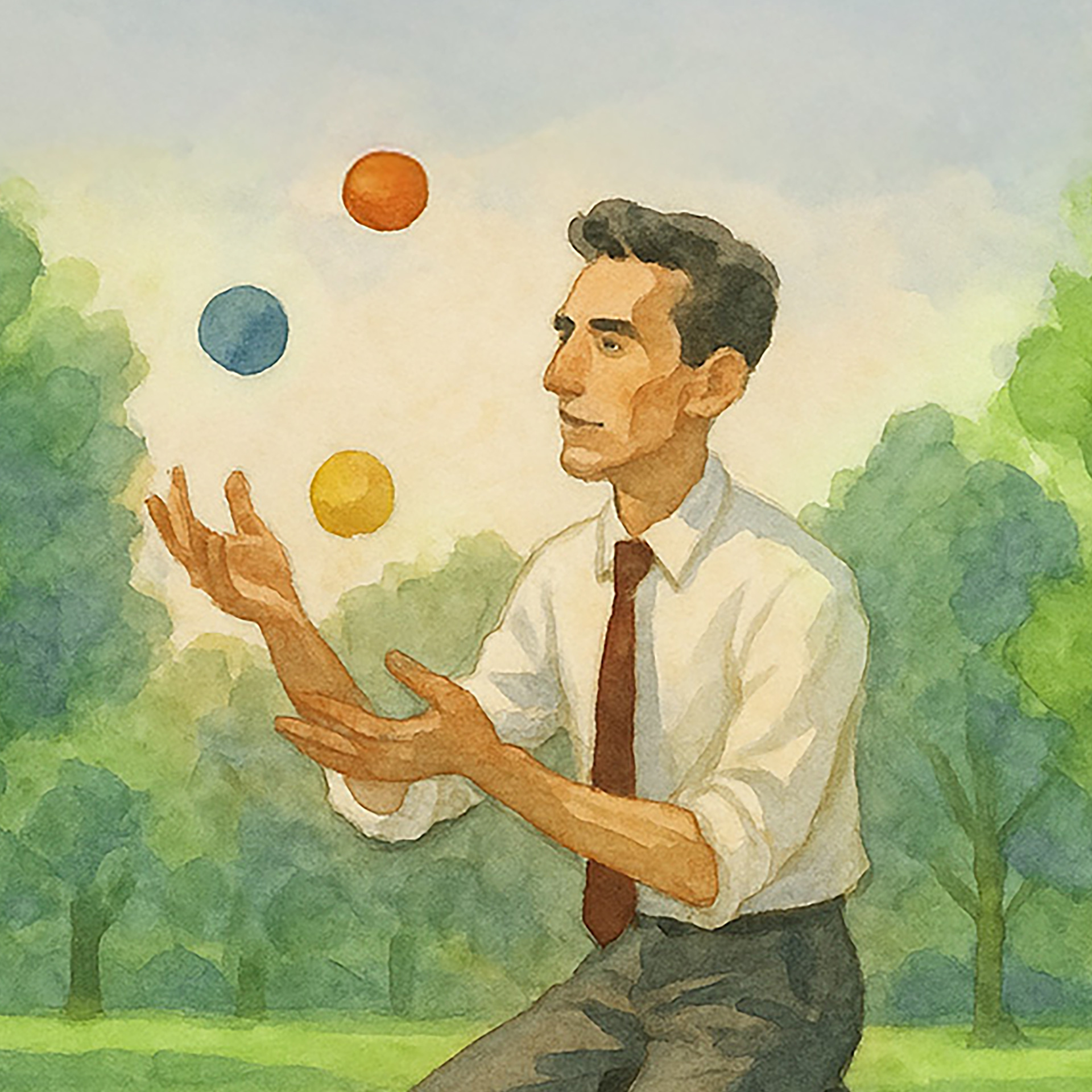
The physical world is what is explored by the natural sciences and by physics in particular. The successes of the natural science programme are obvious, both with regard to its insights into how the world works, i.e. theory, and with regard to the technologies this enables, i.e. practice. The natural sciences have changed our world fundamentally ever since Galileo Galilei.
Objectivity
The success became possible because from the Renaissance onwards, the thinkers and explorers in Europe did not solely refer to what had been handed down since ancient times, but conducted unprejudiced research and looked for results themselves. Whereas the monks in the monasteries interpreted and compiled old manuscripts (scholasticism), the free spirits dared to believe what they themselves could see in nature – even if it was in contradiction to the monastic authorities.
However, the loss of the old authorities called for a new guiding principle to prevent a situation whereby everyone would be able to claim anything. Therefore researcher’s proposition should be independently verifiable, and solely what was discernible by everybody beyond any doubt should in future be true and applicable. Thus the ideal of objectivity was born.
Measurability
But the world should not only be able to be described objectively, but also measured with the highest possible precision. This has two advantages: a) A proposition is all the more credible the more precise its predictions are. The more precisely we are able to measure things, the more significant the observations. b) Besides more precise insights, precise measurements also enable us to build increasingly precise instruments and machines.
The world from the outside
The natural sciences thus focus on what can be seen and measured from the outside. This is what Penrose describes as the physical world. Not my internal view, my feeling or my belief is what is called for, but what can be observed and measured from the outside beyond any doubt. This is the physical world.
The physical world in interaction
We could consider the physical world to be the sole true reality, but our view of the world becomes more inclusive if we add the other two worlds. How do the three worlds interact? – There are bridges from one to the other, there are crossovers, and there are effects from one world on the others. I would like to illustrate how these interactions work with examples from the field of music – a field in which obviously all three worlds are involved.
This is a text in the series about the theory of the three worlds.
Translation: Tony Häfliger and Vivien Blandford
Comments
Related Posts
Have you ever wondered why the musical scales in all musical cultures, whether in the jungle, in the concert hall or in the football stadium, span precisely an octave? Or
Paradoxes are contradictions in logic. Some can be solved inside the the logical system, while others resist this attempt. Some contradictions are not solvable in principle, as K. F.
Self-reference plays a crucial but widely underestimated role in logic. Douglas Hofstadters 'Gödel-Escher-Bach' In the 1980s, I read Douglas Hofstadter's cult book ‘Gödel-Escher-Bach’ with fascination. Central to it is Gödel’s
Stanislaw Lem on entropy (littering) Littering in space had been a concern long before Elon Musk's Starlink programme, and various methods for cleaning up the growing clutter in Earth's orbit